Thursday, 2 March 2017

Will Miss 10,000 please stand up?

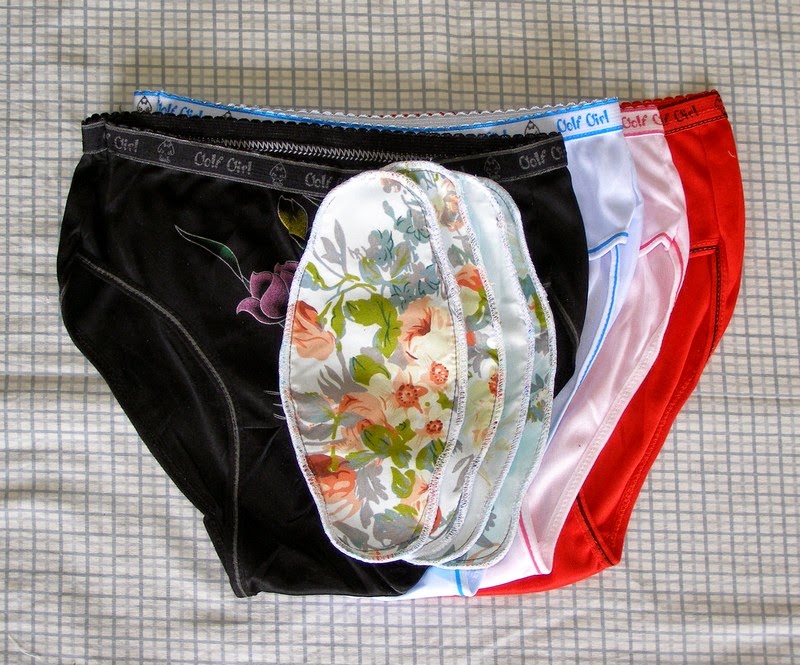
The girls at Porogali Primary School, Pader district share out knickers in groups of three. The pads have already been handed out and put away. One of these is our 10,00th girl.

We have just started our fourth year of the Pads Ministry in Pader, Northern Uganda and a blog post seems to be one good way of marking a special milestone.

Yes, we have now passed the '10,000 girl' milestone and she is somewhere in this crowd of girls you can see at Porogali Primary School in Pader district.

We thought about singling her out and celebrating her but in the end we decided not to embarrass her; just to know that she was there.

That was on 14th of February and was in the middle of a push that took us up to 10,763 at the time of writing.

These young girls will shortly be young women and, in due course, mothers themselves.This project is helping to break the cycle of ignorance and prejudice around menstruation, that leads to girls dropping out of school and being married off young for a lifetime of childbearing.

Girls anywhere can suffer low self esteem and the onset of menstruation, without understanding what is happening, can be crushing. We always tell them how they are each 'wonderfully made' by God, quoting from Psalm 139v14. It is all to easy for them to think that they are some kind of horrible mistake, in a culture that traditionally does not value girls, except as a means of gaining wealth by marrying them off. Attitudes are changing, but slowly.

So, with these simple materials, instruction and encouragement, we are giving these girls just a small but vital bit of control over their own lives.

When they do become mothers, they will know how to help their girls as they grow up.

Each set of 4 pads and 4 knickers, delivered to the girl, costs 9,500 Uganda shillings, roughly £2.21. We think that is rather good value for a life changing intervention!

Thursday, 24 September 2015

Lets go fly a kite!


Every Friday afternoon in term time I have been visiting the dozen Deaf children in the district Special Needs Unit of the local school, Paipir Primary (say pie-pea). My sign language is slowly getting more fluent with use and I have attempted to tell Bible stories.

Let's go.....
We have also been making kites from plastic bags and split bamboo. Kites that actually fly are very rare in Uganda so it has been a lot of fun teaching the Deaf kids this 'special' knowledge. This is a small effort to redress the natural balance which leaves them well behind the curve in almost every way, in a largely unsympathetic hearing world.

fly a kite!
There should be about 120 Deaf children at Paipir but there were only 12 last term. The rest are isolated in their home villages because the parents are unaware that they can go to school, are too poor to attempt it or believe it is no worth sending a deaf child to school.

All of us hearing people pick up our mother tongue without a thought as we grow up. For the deaf, that does not work and sign language must be learned from an outside source; an instructor or a school. Without language, communication, and life, is miserably limited.

Channel 4, 'Unreported World' made an excellent documentary about the issues of Deafness in rural Uganda which you can watch here https://www.youtube.com/watch?v=CNCPgrm8Gu4.


On Sunday mornings at the Church of Uganda (Anglican) church we provide sign language interpretation for the Deaf adults and children who come. After church I host 'Deaf Breakfast' and usually welcome around 10 young adults (with 3 children) and a sign language interpreter into my home for 'Break Tea'. It is generally not very deep but provides the Deaf community with a social space.
Fun at Deaf breakfast
The church has come to rather enjoy having the Deaf coming to Sunday service and a few church members have learned sign language, which augurs well for the future. The Children presented a sign language song to the church one Sunday that was well 
received.


Hearing aids? Sorry, there are no technicians and even if the batteries were available, which they are not, there would be no money to pay for them.

.

Monday, 14 September 2015

Time to catch up, better late than never.


I have been very remiss in my blogging. It was December last year....... Well, no excuses. But I would like to give you a series of sketches of what I have been up to, starting with Pads.  You can expect further posts in the coming week or so on the Deaf, the Radio, Farming and Future Plans. 


Pads Project
This school had a 241 girls over 12. In the foreground is the stack of knickers needed for each to get four pairs. 
The main project I am involved with is providing washable sanitary pads for schoolgirls. I have written about this before, so you can scroll down through the blog or link to here or here to get the full low-down.

To date, this year we have visited 16 schools, 11 of which were 1st time visits. About 1450 girls are now equipped to go confidently to school.

In June we were invited at short notice, by an NGO called ActionAid, to provide pads for the girls of 10 schools at their expense and we have 4 of those remaining to visit in the next two weeks.

Then we can resume visiting our 'old' schools and providing for their 'new' 12 year olds.

This year, by the end of the final term, we should have made and distributed in excess of 10,000 pads and bought and distributed the same number of knickers.

Does it any difference? So far it has proved very difficult to get clear statistics. But anecdotally it is not hard to show and I have yet to come across anyone here who thinks we are wasting our time.

I spoke to a successful woman of around 40 years a few months ago who said that by the time she reached the end of secondary school, she was the only girl in the school. All the others had dropped out for various factors peculiar to gender. Foremost among these was the problems and embarrassment of dealing with periods in a mixed school, without sanitary materials. She was very enthusiastic about this project.

Tuesday, 2 December 2014

Kibong

It feels in some way appropriate that the name of the 24th and last school that we reached with the pads ministry this year has a certain ring of finality about it, “Kibong!”


Pads are handed out at Kibong Primary School.
The hill in the background feels closer than the picture shows.

As schools go it was rather pleasant; the school itself was fairly new and well maintained but the village is set on level ground nestling between a couple of rocky hills, giving it a more interesting aspect than almost all the others we have visited. Most of our schools are set in a relatively featureless, mainly flat landscape with only trees to draw the eye. It has to be said that the trees are often rather fine, in some ways reminiscent of an English woodland landscape only that, on closer inspection they are clearly not Oak, Ash or Chestnut. This is bush country, just a bit too dry to be jungle but allows a great variety of trees to flourish. So far, the agricultural land use is not so intensive that all the trees have been cleared; perhaps because the vast majority of land is still managed using man and woman power; oxen may be used for ploughing but are of no use for weeding or harvesting. There are currently still plenty of tracts of native bush, including mature trees, between the cultivated areas. Perhaps mechanisation or population pressure will change this in a generation or two. 

This man has sewn all but the first
small batch of pads this year!
But I digress. Whilst landscape and environment are important and interesting, it is the people that we are here to serve; for this work, that means schoolgirls. Now, I have explained at length before that equal opportunity in education for boys and girls is a good thing and this is really the first generation here in the rural North of Uganda that have had that opportunity; very many of the mothers of our girls and quite a lot of the fathers had no formal education at all. But when the girls come to puberty and get ambushed by their menstrual cycles, equality of opportunity begins to vaporise.

In the West, periods are a problem1 to be managed, supported by an obliging sanitary hygiene industry. Here, for girls in the mixed schools of rural Uganda, that turns into a week at home, starting with potential embarrassment, maybe shame, every cycle. Sanitary pads are available but at the cost of around two days income. What chance do the girls have of reaching their academic potential in these circumstances?


What you see is what they get.
So this year we have manufactured 10,399 washable sanitary pads, using 138m of polyester fleece, 233m of PVC sheet and 43 bedsheets. We have bought 10,368 pairs of knickers in 7 trips to Lira. It takes a whole day to journey to and from Lira, about 3 hours away, for my colleague Milly. Travelling early in the back of a truck, she buys up to 130 dozen knickers from a number of traders and always comes back with exactly the required number, despite never writing anything down!

We have visited 24 schools, providing 4 pads and 4 pairs of knickers to 2647 girls2. We have actually talked to 2200 girls; in every school there are some off sick, away at an athletics competition, excluded from failure to pay the PTA fee etc. And of course, at any time, there are some who are at home waiting for their period to pass.

All this was done as economically as possible, at a cost of £2.46 (3.68 $US) per child, paid for by interested individuals and churches in the UK, Australia and America. Thank you! You have helped these young people by solving one key life problem for them. They have plenty of other problems to face but solving this one gives them a good start in facing the others.

Notes.
1. Men tend to cautiously think that it is rather incorrect to call menstruation a 'problem', perhaps arguing it is a normal bodily function of healthy people; most women seem to disagree. I will go with the women on this!


2. If you do the maths you will find that dividing 10364 (knickers) by 4 gives 2591 girls, whereas we recorded 2647 girls. There were a very few cases when we arrived at a school and there were more girls than the school had informed us of and we had no backup stock. In these cases we reduced a few girls down to 3 and 3. This may account for the difference. But it remains an unsolved puzzle for the moment.

Tuesday, 9 September 2014

Posta!


Uganda Post Limited is a fine institution that was put in place in the colonial days. Its new 'corporate image' name is "Posta Uganda".

A Postbus, ready for the off.  I like the familiar colour!
Each of the older more well established towns have a post office and some host a post bank or even an internet centre. Post buses run from Kampala out to all the major towns where the Post Offices sort into post boxes that can be can be paid for and allocated, a precious post box key being entrusted to the owner. They carry passengers as a convenient complimentary business. There are no door to door post deliveries; most people do not get mail anyway. And in an age of mobile phones and increasing email use the Posta is feeling the squeeze.

Pader town, alas, is neither major nor old and the bus stops at Kitgum, nearly 2 hours away. From there, post for Pader is forwarded by other means. Or it was until April; then the owner of the rented building in Pader locked the door over a dispute and the Office was shut up (possibly with some items of post still inside).

Some Current Uganda Stamps
Since then our post has piled up in Kitgum with the other Pader mail. A few weeks ago week we managed to liberate ours from Kitgum Post Office and I was able to read some birthday cards as well as some real letters! Thank you R & M, S & R and S.Bi for taking the trouble to use snail mail. It is great to get it...eventually.
Since it does not look as though the Pader office is going to open again any time soon, we have decided to open a Kitgum PO Box. So if you are still dedicated to snail mail (and I hope you are) then our new address is:

Emmanuel International,
Pader Restoration Resource Centre,
P.O Box 12,
Kitgum,
UGANDA.


We think we will probably be able to pick it up from Kitgum at least once a month; which is better than the Pader lockout. But nothing urgent please!

Barbara Rivera,
1963 - 1994

Remembered


Emmanuel International (EI), the organisation I work with, has been in existence since 1975 in Canada, when it was formed out of the experiences of the Ethiopian Famine. The UK arm was started in 1978. Since then many people have gone out to third world countries with EI and worked in places that are mostly 'off the map'. EI has an ethos blending 'Mission' with relief and development, avoiding separating the one from the other. And we strongly prefer to work alongside local church partners.
Of the many ex-patriots that have been with EI over the years, a few stay long term but many work for a year or two and move on. Many are young people starting out on their lives, making the few oldies feel either young or ancient, depending on their energy levels at the time!

The old EI Compound in Patongo today.
The burned out garage on the left, accommodation on the right
Back in 1983 EI established a base in Northern Uganda in a small town called Patongo among the Acholi people, who were suffering the effects of internal strife, coupled with lack of development, and geographical and political remoteness from the capital, Kampala.

The EI work of health education and care, agricultural development, relief in famine and war continued from the Patongo base until 2002 when the LRA rebel group attacked the EI compound, burning the vehicle garage with the vehicles inside. No one was hurt in the attack but EI decided to withdraw. The LRA, known for their gruesome brutality were completely unpredictable; sometimes polite, sometimes murderous.

When it comes to getting people out to remote places and later getting them back again, EI has an amazingly good safety record. Only one EI person has ever died in the field; Barbara Rivera.

Barbara joined the EI team in Patongo in 1992. Born in the Philippines in 1963, her father moved to London with his work when she was 10. She joined EI with experience of teaching Sunday School and a degree in Herbal Medicine. She wrote of herself in 1994 “I like visiting people but am actually quite shy and not always talkative! (more of a listener than a talker) I prefer practical / manual work to written desk work and can be quite creative when I'm in the mood. I enjoy being with people but also like my own company.” In Patongo, Barbara seems to have concentrated on the children. She taught a regular Sunday school class. The two photos of her were taken on a day when she and the district nurse were shepherding children through the bush to keep them safe from a rebel incursion (they would have abducted the boys as soldiers).

The route from Lira.
Ignor the time; Google does not compute dirt roads!
On 11th June 1994, just over 20 years ago, Barbara and her sister, who was visiting from the UK, were in Lira, the nearest big town to the south, looking for transport to take them the 106 km, 3 or 4 hours to the North East over dirt roads, back to Patongo. They found transport in the form of a small petrol driven local truck. As is normal even today, the polite Africans made space for the two Mzungu (white people) in the cab and the other passengers rode in the open back. The driver had been drinking. The truck's fuel pump had failed and the fuel was being gravity fed into the engine's carburettor from a jerry can in the cab.

The driver was in a hurry; about half way, passing through Rackoko, he did not decelarate as they descended the shallow valley after the town. The passengers in the back shouted to the driver to slow down but he did not react. At the rough and muddy spot at the valley bottom he lost control, the vehicle left the road and rolled several times, settling on its side. Amazingly everyone survived the crash but petrol from the lashed up jerrycan had leaked out. The driver clambered out in a panic and ran away. The petrol ignited. Barbara, pushing from below, helped the others in the cab escape but could not get out herself and was overcome. Some youths from the back pulled her out of the cab; she was hurried to hospital in Lira but did not survive. A tragic and devastating loss.

Children have long memories; and they grow up. Today Barbara's Sunday school children have grown into responsible adults, knowing that part of who they are was formed by Barbara. Some of them have gone into local politics, others into administration, many are no doubt ordinary town and village folk, most are churchgoers; but they have not forgotten. Patongo needed another Secondary School and the old Sunday school friends and the older EI staff who knew Barbara got together and are on the school board. They have named it the Barbara Rivera Secondary School. It is a local initiative, a work in progress but it is happening and is a fitting tribute to a herbalist from London, young woman with a heart for children, a gentle teller of Bible stories.


The information in this article was gathered from published EI material, EI personnel and from an eyewitness, one of the youth in the rear of the vehicle. If you know any further information or corrections, please let me know.

Friday, 5 September 2014


Pads, End of Term


 Report.


I last posted in April at the end of the first (Ugandan) term when we had visited our first school for the year.

Since then, in the second term up to August, we have visited 11 more Primary Schools, bringing the total number of girls we have helped this year up to 977. Each girl gets 4 washable pads and 4 pairs of knickers. Most of the girls possess neither before we come. Those who attend our session get taught some biology, a lot of practical wisdom on how to deal with their periods and get encouragement from the Bible to see their intrinsic, worth as unique people. Girls are not much valued in most African societies and they know that very well, so any encouragement that helps them keep their dignity can be life changing.

Individuals of great value.
We take the names of absentees and package pads and knickers for each one. (When you think about it, on any day we visit there are some going to be some absent due to …...!)

The tailor at work
We have had to develop a fairly slick buying, shipping, marking, cutting and sewing operation to keep up with the demand for pads. This has got so efficient that, as I write, we already have most the pads finished that we expect will be needed next (3rd) term and we have over bought on the pad cloth and plastic sheet; oops, I applied the brake too late!


Soon after we started this year, in April, it became apparent that we could produce pads quickly enough and visit schools frequently enough to aim for 24 schools in the year rather than 12 as originally planned. But it would cost twice as much. All the while, funding has been steadily coming in from UK supporters, with a good single donation from the US and another larger one from EI Australia which assisted us in getting discounts through bulk buying. If funds continue then we should reach our 24 school target this coming term and have a good stock of material ready for next year, if we continue. The cost per girl has been kept to £2.83, about 4.62 $US.


One new and encouraging aspect that has emerged, is that that some head teachers are getting really interested in the possibilities of what we are doing. Their reason for this is that they want their girls to perform well but for years have been frustrated by the girls missing days of school every month and not reaching their potential. They can see that providing the girls with pads, giving them the confidence to stay in school, makes a real difference. So they are beginning to ask the question; how can the schools ensure that the girls are always provided for? They realise that we will not be here for their foreseeable future. It may seem simple to us but believe me the problems posed by the poverty and culture of the families and inadequate government funding are formidable. But then some of the head teachers are formidable people!

Friday, 25 April 2014

You're doing what!?


Milly with the first few pads
in the tailor's shop.
About a month ago I was sitting at a dining table in Kampala with a hospitable English family I have got to know. I explained what I had come back to  Uganda to do and the daughter of the house, a grown woman who had been in aerospace recruitment, asked me a question that went something like this:

"What made you give up a job as an engineer in the UK aerospace industry so that you could distribute sanitary pads to rural schoolgirls in Northern Uganda?"

It is an excellent question and I laughed loud and long when I heard it. It does seem to be a remarkable change of career. But it also seems to contain an assumption that somehow the aerospace industry is sophisticated, modern and exciting, whilst distributing sanitary pads somehow sounds like a job for a janitor. Be that as it may, that is what I am doing!

After 3 months or so of home leave, including the birth of my third grandchild, Mary Anna, I am living  in the Northern Uganda town of Pader again. The Northern Region is generally poorly developed, has poor communication links and is in recovery from decades of deadly cattle raiding, a brutal rebel insurgency and brutal military responses

Not to speak of a 10% HIV rate and a (Uganda wide) median age of 15 years; there are more children than adults. Thankfully there is peace now but the regional 'post traumatic stress' will take a generation or more to recover from.

I wrote in "Sowing Pads" last December about the problems girls face in education and our small scale and local solution to it. Well now that I am back my task is to continue that work, make it better and if possible inspire a larger NGO to take on and expand it.

The school notice board at the main road.
Last Wednesday, 23rd April, Milly and I visited our first school this year. Pagwari Primary School, which is maybe 10 minutes from town but 5 of these minutes are on a bush track. Milly gave them the talk, I gave them my story of the 4 generations of women and girls who are deeply important to me, moving on to God viewing each girl as important and unique (from Psalm 139). We distributed 4 washable pads, 4 pairs of knickers and one black plastic bag to each of the 64 girls present. 14 were away at an athletics competition and we left things for them too. There were time when the classroom looked like a bazaar but in fact order was never far away.
Distribution time.
4 and 4
It had taken some hard work to get the 280 pads marked, cut and sewn in time (see title picture). Also a day's trip to Lira by Milly (on 'local transpot' i.e. a truck) to buy 94 dozen knickers (enough for 4 schools if we are careful). We now have a 2 week school holiday to prepare for the next few schools.

If you are supporting the project, thanks and well done. Our target this year is 12 schools. But there are more than 12 within easy reach of Pader and it looks like our production rate is satisfactory, so with more support we can extend to reach more schools (at around £2.90 per girl or £200/school). 

If you want to challenge us to extend then please contact the EI UK office, details at www.eiuk.org.uk. Please earmark any donations for 'Northern Uganda, Pads'.

Saturday, 7 December 2013

Homeward Bound


It is a month short of two years since I left the UK for Uganda and it is time I came home for a visit. My ship (sorry, flight) gets in on the 10th December, rather early in the morning and I plan to stay until the first few weeks of March.

In the time I have been away, I have been blessed to become a grandfather twice, so I am really looking forward to getting to know my new family members.


The few things I have written about in this blog have all been real life experiences that I would not have missed for the world. I have been very blessed in getting to meet many and get to know some excellent people in an around Pader, Northern Uganda and I hope to get back there in March 2014. They all send their greetings to you folk in the UK!


If you want to contact me in the UK, start with email to me at tom.g.edom(at)gmail.com because I can't be sure of my UK phone number yet. I'd be glad to meet up with friends old and new and share as many or few of my stories as you have interest to listen to.


I have other stories to share from my time in Northern Uganda (and maybe home) so I hope to continue blogging while in the UK. Watch this space.


Sowing pads

No Desks? No problem! Girls sewing washable pads.
Way back at the start of my blogging I promised to talk to you about menstruation. That piqued the interest of some at the time but it really is high time I came good on my promise. So.....

What is an old white man (with no medical heritage) doing concerning himself with such things? Good question, long story; that I hesitate to bore you with but here goes!

The background is that in Uganda 'universal education' was introduced back in 1997, giving all children equal assess to free Primary Education. Good stuff. But not simple. First build accessible local schools; everywhere. And train many many more teachers. And then find that girls are not actually equal to boys in the culture and in biology, especially from puberty. The simple and 'normal' way to deal with a girl's period is for her to stay at home. That means missing about 4 days of school every 28 days. Unless they are bright and determined it is no wonder they fall behind in the class rankings, get hassle from teachers and diminishing enthusiasm from parents who have to find money for them (only tuition is free) and they drop out of school. Often to be married, for which the parents get a bride price. One study in Uganda reckoned that 20% of school girl drop outs are due to menstruation related causes.

Our washable pads. Hand sown L and experimental machine sown R.
Now obviously, disposable pads are the answer; they are cheap and available. Except they are not cheap to a girl who has no money. Nor to a family which only sometimes has money and to whom this is a new and 'unnecessary' expense. Mother has never used them! And they are not available in rural areas because there is no demand.

What to do? Well, before I came to Uganda, Emmanuel International staff initiated a program where schools were visited, materials were given and washable pads were sown by the girls. The program was on hold, waiting for a fresh start. A bit of research, some 'chance' encounters and some hard work came up with an improved washable pad design, a bit of money, a concept note, budget and permission from the District Education Officer to start visiting schools.  That was around May this year.  I teamed up with one of our National Staff, Milly, and off we went. We have now visited 10 schools, taught just over 700 girls, marked and cut nearly 4,000 pieces of cloth (for 1390 pads). Each girl gets 2 pads to sew themselves and 2 pairs of knickers. (Pads are no use without them).

Milly is a natural teacher.
What we found was that in a typical class of 60 girls (we select the most mature in the school), around 40 have already started their periods, around 9 are wearing knickers and maybe 1 or 2 have access to disposable pads. Those on their periods manage them by missing school.

Milly teaches in the local language about the biology and practicalities of menstruation and how to sew and use the pads. Then I talk (translated by Milly) about the women that are important in my life who have achieved a good education. Then I talk from Psalm 139v13 & 14 about how we are each wonderfully made by God, unique individuals, known and valued by Him. i.e. God thinks you are important too.
Would it be better if a woman gave this talk? Maybe, but women affirming women has its limitations. A man affirming women can be unexpected and more likely to be noted? Or maybe an old white guy can do what a Ugandan man could not or would not do?

Feedback from teachers following the visits has been strongly positive.

There are problems to solve and questions to ask:

2 pads and 2 knickers is really not enough. It should be 4. But 4 pads is too many for a girl to sew in an afternoon and anyway the quality of the finished items is 'variable'. And it is twice as expensive for purchasing and takes twice as long for marking and cutting.
Milly translates as I talk.


In the larger schools our cap of 60 is simply too low and we have to return a second time to teach 20 or 30 more. It would be better to do one school with one visit.

School terms of around 12 weeks are surprisingly short when you take into account 1st and last weeks, football, athletics and music competitions, termly tests and final examinations, all of which are bad times to try and muster all the older girls.

There are over 100 Primary Schools in Pader District. Agago District is in easy reach of us in Pader Town and there may be another 100 there. Even if we limit ourselves to a reasonable travelling radius from Pader there would be about 50 schools. This year we managed to reach 10 in two terms. Should we upscale the project?


Saturday, 9 November 2013

What is her name?

A Ugandan butterfly. 

As I have said before, I have some good friends here in Pader, Uganda, who are profoundly deaf.

Some while ago I was with one of my deaf friends in a clinic. She has a lovely personality, almost always sunny, is a skilful and hard working farmer, can braid hair in many different styles, is always smartly dressed, expresses herself with freedom in sign but has almost no formal education.

She needed to see a doctor and wanted someone to interpret for her. Her treatment needed daily attendance for 3 more days so the next day she came and found me. This time she came with her mother and baby sister and off we went to the clinic. I asked her the name of her sister. Her answer rocked me. 'I don't know'.
Various thoughts raced through my brain. 'But you're 18 and responsible, how can you not know your own sister's name?' and 'How come you have never asked?'

Then I began to think more clearly. My friend can 'write her own name' in sign alphabet and on paper but she is very far from being able to write or read fluently. She names herself by her sign name, two fingers together stroked across her forehead. But of course she knows perfectly well who her baby sister is and could doubtless pick her from a crowd of 10,000. Names that we are so used to are labels that we put on people. We use them for all sorts of things from birth certificates to love songs. But they are names in spoken language.

Now the deaf can and do learn to read and write but with varying degrees of success. Which is not surprising when you consider that (most) writing is spoken word coded on to paper (or screen). If you do not know how the spoken word sounds then reading the code gets a lot more challenging. To tell you the truth I have not yet worked out the mental process they use to understand the written code, because they can't 'say it' in their heads like we do (unless post lingually deaf, see below).

Going back to my friend, why should she know the 'hearing name' of her baby sister? When the baby gets older she will probably give her a sign name and that will be I.D enough. If my friend really needs to know (maybe take responsibility for the baby) she will learn the spoken name in written form. But she will never hear it spoken and never speak it herself.

Above, I said that most writing is coded speech. However it struck me that pictographic writing, as used in various forms in and around China, may have parallels to sign language in that it does not spell out a spoken word but conveys a meaning or idea in itself. In our thorough education systems we learn spelling among other esoteric disciplines. But words are not just things that you spell, they are units of meaning that we compile into ideas or descriptions that are conveyed to another person. So it is with sign language. Complex ideas and narratives can be conveyed using the hands, body and face to make words and phrases, strung together into language. That is both a beauty and problem of sign language. It cannot easily be rendered into a written form without translating it through a spoken language on to the page.

What has that to do with a butterfly? If you look carefully at the picture, you may find it.

  • For completeness I should say that those who are born deaf (or acquired deafness very young) really have very little idea what speech is meant to be; they have never heard it or they became deaf before language had any meaning for them. These are termed Pre-Lingually Deaf.
  • There are plenty of deaf people here in Uganda and throughout the world who became deaf as children, mainly through childhood illnesses. Then there are a lesser number who become deaf as teens or adults through sickness, accident, assault and such like. All these are termed Post-Lingually Deaf. Obviously, the post lingually deaf have a distinct advantage when it comes to lip-reading, vocalising, even reading and writing, because to varying extents they remember what speech feels like to hear and to speak.

Sunday, 13 October 2013

Now Wash Your Hands!


If you have not got running water from a tap, how do you wash your hands? In the kitchen, after using the toilet, in a medical setting, the problem remains largely unanswered.

Quite a long time ago a Jim Watt of the Salvation Army in Zimbabwe thought out a way to do it, and it is now known as a Tippy Tap. It is basically a tipping jug that is operated by the foot, so dirty hands do not contaminate it.

When we can, we promote these in the community but things here are seldom straightforward. Children play and empty the water out and others do not get round to refilling it; goats and cows eat the soap or it gets 'borrowed'. Or it just does not last the rigours of African life. Here is a picture of a community workshop showing two different container options. But the good thing is that a few people like them, stick with them and may eventually persuade their neighbours of the health benefits.

Recently I was asked to install two tippy taps in a new health centre here, one in the clinical officer's consulting room and the other in the nurses treatment room. They are expecting running water 'soon' but need to maintain hygiene standards now. The title picture is the nurse's tippy tap made from a commercial plastic watering can, a plastic cup, a soda bottle cap, 2 nails, some string and a wooden stick.

Wednesday, 9 October 2013

Football, Football, Football!

Football has never been my favourite game. When I was at school I was always in the 2nd eleven, the so called 'All Stars'. I can remember one moment of near glory in a home match one time. I was getting so irritated by our collective incompetence that I decided to take matters in to my own hands (feet). The ball came to me and I dribbled up the field towards the goal with focussed determination; tackled a few times I refused to give up the ball. Within range of the back line I gave the ball a mighty boot and found that I had misjudged the position of the goal by a good five yards. My effort was mentioned by the teacher at the end of the game; you can judge from that how bad our collective performance was.


But I am happy to admit that many people love football. As a substitute for international, interracial, inter-tribal or even inter village blood-letting it certainly has its plus points. Here in Uganda, the English premier league is followed with proper seriousness (most people support Manchester United, Arsenal or Chelsea). The National Team (go Uganda Cranes) is followed with pride but can not be said to be dominant.

At a grass roots level boys play it pretty much anywhere and girls can be encouraged to play it in Primary School. In Secondary School, girl's football is growing and the boys are, of course, highly competitive.

One of the the national staff here, Francis, is a keen footballer (and high scoring striker in the town team). When he can get the resources he likes to run football clinics to improve the technical skills and fitness of the local teams. This time it was with a lot of help from a soccer enthusiast, Curtis, who came (for the third time) with a visiting medical group from Canada, where they call it soccer. They took the opportunity to give a talk from the Bible, which is always listened to with great respect . And then to stage a couple of friendly tournaments. When the Canadians were here we had an all day tournament for four men's teams and then yesterday it was two secondary school girls teams that met at the town ground. The picture is from that match.

Almost everyone here says that getting the youth into football is a good thing. It gives them something else to do, think and talk about than the opposite sex, drinking, troublemaking and crime. It teaches personal self discipline and commitment, the ability to both win and to loose, depending on others (and forgiving their failures as they forgive yours) and much more. The grass-roots football here is mainly run by Christian people who have a heart for the youth, love the game and see it as a way of doing good in the community. They respond well to any effort to get teams together improve performance and compete. One of the reasons they are so keen to join in is that their own resources are so thin. Most players are barefoot. The club may only have one worn-out ball (soon to expire) and no team strip. They get a little out of joining in with a competition, especially if they win.


Anyway, to cut a long story short I just want to say that there are enormous possibilities in this 'Football ministry' for the right person or people to reach out to the youth here in Pader District. It does not have to be only football; volleyball is also keenly contested and (to a lesser extent) net ball. And if anyone has a source of new footballs, volleyballs, net-balls and/or team strips (even if they are second hand) then please let me know.

Tuesday, 13 August 2013

Preparing the ground

Getting to the point of growing anything useful always take a lot of work. This post is the first of two that fill you in on the background work.

It all kicked off in November when I employed a friend, Okot Ceasar (yes, correct spelling), to clear the bushy weeds that were invading the area outside my back door. Here you see Ceasar at work with a hoe, assisted in this picture by Odong Patel, one of our guards. A few days later the dried brush / weeds, seeds and all were burned.


I want to note here that I am generally dead against burning because among other things, it sends all the useful material into the sky and leaves behind nothing benefical. So at all other times I have insisted that organic material be left in the field to be ploughed in. This has not made the work any easier because cultivating through plants, dead or alive, is much harder work than for a bare, burned field.

After that it was a time of planning. Mechanical ploughing was required but a walk over the field showed that there were many tree stumps hiding there, buried but putting up shoots. Any one of them could break a plough or puncture a tractor tyre. In the first weeks of January my friend Okeny Tiberio (say Ocain) got to work. I think I can safely say that I have seldom met such a persistent and skilful worker. With only a hoe and an axe he located in the order of 60 stumps, exposed them by digging round them and then, below plough depth, chopped them free. It took around 2 weeks.


The dry season is over Christmas and in to March; whilst our land dries more slowly than other areas, when it does, it sets like concrete. With the field now clean of bush and stumps, the plan was to get a tractor in before our land dried. It was booked but there were delays, it was working in a different district, would come soon. When it eventually arrived on 22nd Feb, the ground was too hard to plough and after a few furrows were laboriously turned the tractor retired, defeated.

Now we had to wait for the rain to come and soften the ground. When it did rain, the tractor was delayed again, in Gulu district, and then we were told it had broken down. Another tractor was located that was being prepared for the season by CCF, a friendly local NGO. We offered to test it for them, knowing that our ground was free of stumps.

When the tractor was ready for testing on the 24th April, the tractor struggled but ploughed the land, more or less. It was really too dry and hard but the job was done. It left the field deeply rutted and not really ready for planting.

What next? A tractor again for a second ploughing? There was an availability problem; and would the field really be flat enough? An Ox plough? We booked an Ox team and they tried but gave up because the dried grass on the surface (that I refused to burn) was clogging the plough. This picture is not of the one that came but a different one in a neighbour's field.


Now what? Time was flying, it was time to plant! Bring in the diggers! Three casual labourers living in town but from a different region were contracted to dig and level the field. It took several weeks from around 13th May; working from early morning to mid day and then, on a good day, from 4 till dusk, they dug away until it was done, skilfully burying green growth and levelling the plough ruts. As soon as the digging was complete on the first part of the field we started chasing them, planting first rice and then sunflower. But that is for another post.